
How Bali Airport Slots Work for Business Aviation
How airport slots and PPR work for private jets at Bali DPS (WADD): request steps, slot timelines, revision rules, and peak-season rationing, as of August


Bali’s I Gusti Ngurah Rai International Airport (DPS/WADD) is slot-coordinated: every business aviation movement needs an approved airport slot plus prior permission (PPR) before departure, per business aviation guidance current as of 2025. Requests are filed alongside your landing permit, revisions restart the queue, and during the July-August and December-January peaks, apron rationing decides who actually parks in Bali.
That is the short version. The longer version matters, because slots at DPS behave differently from slots at a large hub with acres of remote stands. Bali is a single-runway resort airport in Tuban, Kuta, Badung Regency, operated by state-owned Angkasa Pura I, and its dedicated general aviation apron holds roughly 14 aircraft as of August 2026. When twenty jets want the same New Year window, the arithmetic gets unforgiving fast. Here is how the system actually works.
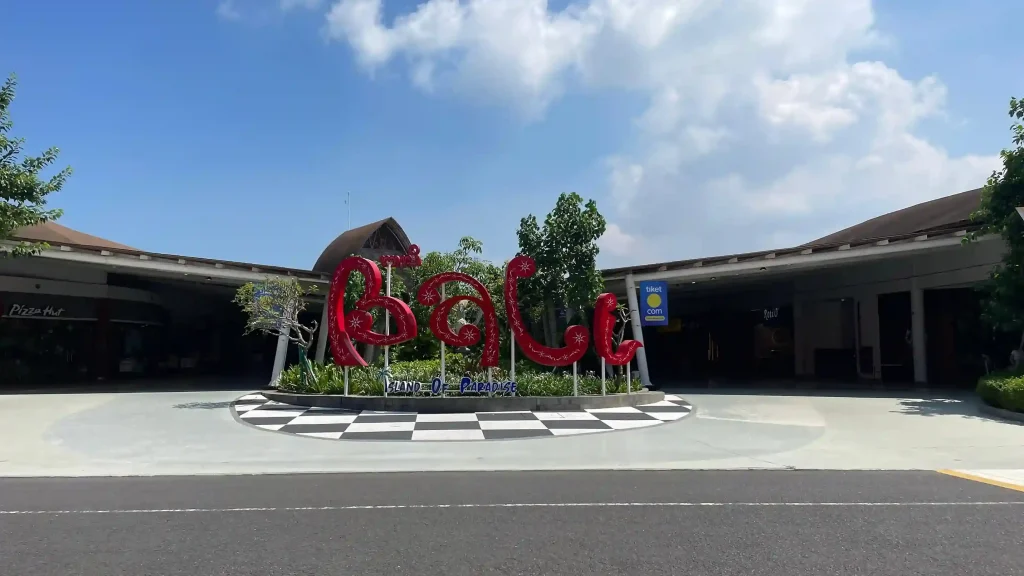
Why does Bali require slots and PPR for private jets?
Indonesia treats its airports as slot-coordinated facilities, and 2025 guidance for business aviation confirms that both a slot and PPR approval apply to general aviation movements at DPS. Two physical constraints drive this.
First, runway capacity. DPS runs a dense schedule of international and domestic airline traffic on one runway. A business jet arrival has to fit between scheduled waves, so the coordinator assigns a specific window instead of letting jets arrive on request.
Second, apron capacity. The GA apron — served by the general aviation terminal that ExecuJet has operated since November 2022 — accommodates around 14 aircraft. A slot at DPS is therefore never just a runway time. It is an implicit claim on parking, and parking is the scarcer of the two resources.
The practical consequence: an approved slot is a permission to arrive at a defined time, not an open invitation to stay as long as you like. Ground time is part of the negotiation, especially in high season.
How do you request a slot at DPS?
The request itself is a short message. The prerequisites are what take time. As of August 2026, a workable sequence looks like this:
- Appoint a ground handler. Ground handling is mandatory for foreign-registered jets at all Indonesian airports, a rule confirmed in 2025. Without a named handler, nothing else can be filed.
- Assemble the flight file. Aircraft type and registration, MTOW, operator details, crew and passenger information, full routing, and the requested arrival and departure times.
- File the landing permit. International movements need a landing permit through the DGCA process, which currently runs 3-5 business days and demands extensive documentation.
- Submit the slot/PPR request. The handler files with the airport coordinator, referencing the schedule in the permit application so the two documents match.
- Lodge the flight approval. The FSC is filed through the official SMS-FSC digital system as the permit side progresses.
Most operators never deal with the coordinator directly. Their handler or a dedicated airport slot coordination desk files, tracks, and revises the request as one package with the permits — which prevents the classic failure mode at DPS: a permit approved for a time the slot no longer matches.
What does the slot-request timeline look like?
These are planning bands as of August 2026, drawn from how requests actually move — not official processing guarantees, and always subject to change.
| Milestone | Low-season lead time | Peak-season lead time (Jul-Aug, Dec-Jan) |
|---|---|---|
| Appoint ground handler | 7-10 days before arrival | 14-21 days before arrival |
| File DGCA landing permit | 7 business days out (3-5 days processing) | 10+ business days out |
| Submit slot/PPR request | 3-5 days before arrival | 10-14 days before arrival |
| File FSC via SMS-FSC | In parallel with permit approval | Same, started earlier |
| Slot confirmation issued | Typically 24-72 hours before | Can hold until 24-48 hours before |
| Last realistic revision | Up to roughly 24 hours prior | Often none without losing the slot |
Read the right-hand column twice if you are planning a December arrival. The single most common mistake in Bali business aviation planning is applying low-season lead times to a peak-season trip.
How do slot revisions and changes work?
A revision is a new request wearing old clothes. Small time shifts inside the same operating window are sometimes accommodated quickly; a date change means a fresh slot request and an amendment on the permit side, and in high season a changed request goes to the back of the queue.
Four rules keep revisions painless:
- Move early. A change requested 48 hours out has options; a change requested 6 hours out has none.
- Keep slot and permit synchronized. An amended arrival time that only exists in one document is how jets end up holding.
- Treat a registration swap as a new application. A different tail number changes the permit, the FSC filing, and the slot record.
- Bundle multi-leg domestic plans. Special domestic permits with validity up to 30 days exist for multi-leg itineraries, confirmed in 2025-2026 — one permit umbrella, though each DPS movement still needs its own slot.
What happens during peak-season rationing?
In July-August and December-January, demand for the roughly 14 GA parking positions routinely exceeds supply, and the coordinator starts rationing. Expect some combination of the following, in rising order of inconvenience: an offered slot a few hours off your preferred time; a cap on ground time; a drop-and-go, where the jet lands, disembarks, and repositions to Lombok, Surabaya, or Jakarta; or, at the extreme, no availability on the requested date at all. The wet season from November to March adds weather to the planning equation, but the real crunch is calendar-driven, not meteorological.
The statutory cost of the movement itself stays modest. Per the published DPS charge schedule, the international landing charge is USD 3.64 per tonne MTOW up to 40 tonnes, and movement-based charges start at USD 37 per movement for aircraft up to 100 tonnes. The commercial layer is where budgets move: market benchmarks as of August 2026 put FBO-style ground handling at USD 800-2,500 per movement depending on aircraft size — quote-based figures, never official tariffs.
How do slots fit with permits, handling, and 2027 compliance?
Think of a DPS arrival as a three-legged stool: the slot/PPR, the permit stack (DGCA landing permit plus FSC via SMS-FSC), and mandatory ground handling. Each leg is approved by a different party, and all three must reference an identical schedule. When one leg moves — a delayed permit, a revised slot, a handler change — the other two must be updated the same day.
One more date for planners: ICAO Annex 14 Amendment 18 on ground handling becomes applicable on 26 November 2026, shaping compliance expectations at DPS through 2027. The direction of travel is clear — documentation discipline tightens from here, and operators who already run slots, permits, and handling as a single coordinated file will feel that change the least.
Frequently Asked Questions
How far in advance should I request a slot at Bali DPS for a peak-season arrival?
Start 14-21 days before arrival for July-August or December-January. Appoint your ground handler first, file the DGCA landing permit at least 10 business days out (processing takes 3-5 business days as of August 2026), and submit the slot/PPR request 10-14 days ahead. Confirmation may still only arrive 24-48 hours before the flight.
Can I change my DPS slot time after it has been approved?
Yes, but a revision is effectively a new request. Small shifts inside the same window are often workable if requested more than 48 hours out; a date change requires a fresh slot plus a permit amendment. In peak season, revised requests rejoin the queue, so confirm your schedule before filing rather than planning to adjust later.
Does an approved DPS slot guarantee overnight parking for my private jet?
No. The slot clears your arrival and departure times, but parking on the roughly 14-position GA apron is rationed separately. In July-August and December-January the coordinator may cap ground time or require a drop-and-go, with the aircraft repositioning to Lombok, Surabaya, or Jakarta and returning for the scheduled departure.
Frequently asked questions
How far in advance should I request a slot at Bali DPS for a peak-season arrival?
Start 14-21 days before arrival for July-August or December-January. Appoint your ground handler first, file the DGCA landing permit at least 10 business days out (processing takes 3-5 business days as of August 2026), and submit the slot/PPR request 10-14 days ahead. Confirmation may still only arrive 24-48 hours before the flight.
Can I change my DPS slot time after it has been approved?
Yes, but a revision is effectively a new request. Small shifts inside the same window are often workable if requested more than 48 hours out; a date change requires a fresh slot plus a permit amendment. In peak season, revised requests rejoin the queue, so confirm your schedule before filing rather than planning to adjust later.
Does an approved DPS slot guarantee overnight parking for my private jet?
No. The slot clears your arrival and departure times, but parking on the roughly 14-position GA apron is rationed separately. In July-August and December-January the coordinator may cap ground time or require a drop-and-go, with the aircraft repositioning to Lombok, Surabaya, or Jakarta and returning for the scheduled departure.
Last updated 4 August 2026
Related Articles
- Bali Private Jet Near Me’: Top 2027 Departure Hubs in Asia for Four Seasons and Remote Lands Jo
- From Jakarta to Bali Private Jet: Best 2027 Routing Options for Southeast Asian Luxury Traveler
- Booking Your Bali Private Jet: A 2027 Pre-Arrival Customs Guide
- How Much Does a Budget Bali Stay Start at in 2027? Excluding Hotels: 50/Day Breakdown

Send your flight details
Tail number, MTOW, dates, passengers and services — a written quote typically comes back within one working day.
Leave a Reply