
Tips for Family Offices Planning Regular Private Jet Trips
How family offices plan quarterly private jet trips to Bali: permit cadence, DPS slot timing, annual planning calendar, crew retention, and cost bands as o


Family offices flying a principal to Bali on a quarterly rhythm should run a standing cadence: file each DGCA landing permit at least ten days out (processing takes 3-5 business days as of August 2026), request July-August and December-January slots a full quarter ahead, keep one retained ground coordinator on file, and budget USD 2,500-12,000 per arrival by aircraft size.
One trip to I Gusti Ngurah Rai International Airport (DPS/WADD) can be arranged reactively. Four to eight trips a year cannot. The dedicated general aviation apron at DPS holds roughly 14 aircraft, ExecuJet has run the GA terminal since November 2022, and Indonesia treats its airports as slot-coordinated with PPR required under 2025 guidance. A family office that shows up trip-by-trip pays in scrambled slots, rushed paperwork, and crew churn. One that plans annually gets the same apron on very different terms.

Why Do Regular Bali Rotations Need a Different Playbook Than One-Off Trips?
Because friction compounds. One late permit filing costs one delayed departure; a permit process that runs late four times a year costs the principal a full day annually and teaches the flight department to distrust the schedule.
Three structural facts shape the playbook, all current as of August 2026:
- Permits are not instant. Landing permits via the DGCA process currently require 3-5 business days with extensive documentation. There is no reliable same-week option for a foreign-registered jet.
- Slots are contested twice a year. Peak pressure on DPS slots and apron parking hits in July-August and December-January. A quarterly rotation will collide with at least one peak window every year.
- Ground handling is mandatory. Indonesia confirmed in 2025 that foreign jets must appoint a ground handler at all Indonesian airports. The question is never whether you use one, only whether the same team knows your aircraft by tail number.
How Should a Family Office Structure Its Permit and Slot Cadence?
Treat permits as a subscription, not a purchase. The flight department or the retained coordinator should hold a living documentation pack — registration, airworthiness, insurance, crew licences, operator details — so each DGCA filing is an update, not a rebuild. FSC filings go through the official SMS-FSC digital system, which rewards clean, consistent submissions from a known applicant.
Two cadence tools matter for repeat visitors. First, special domestic permits with up to 30-day validity exist for multi-leg itineraries, confirmed through 2025-2026 — useful when the principal pairs Bali with Jakarta or Labuan Bajo legs in one visit. Second, slot requests filed a quarter ahead consistently beat requests filed two weeks out during peak months, when the roughly 14-stand GA apron fills.
Families that own the aircraft outright usually stop coordinating trip-by-trip altogether and move to a retained file — our aircraft owner services desk keeps permit documentation, crew records, slot histories, and handler relationships current between rotations, so each new trip starts from a warm file rather than a blank form.
What Does an Annual Bali Planning Calendar Look Like?
Built around a quarterly rotation with trips in February, May, August, and November, the year looks like this:
| Window | Action | Why it matters |
|---|---|---|
| Early January | Confirm February slot + PPR; refresh document pack for the year | First trip sets the template; expired insurance certificates stall DGCA filings |
| Mid-April | File May permit; book crew hotel block for the year | Pre-peak pricing on crew accommodation before the July-August squeeze |
| Late May | Request July-August slots even for the August trip only | Peak window one — apron parking at the ~14-stand GA facility tightens first |
| Mid-July | File August permit 10+ business days out; confirm CIQ coordination | Peak processing loads slow everything; buffer beyond the 3-5 day norm |
| Early October | File November permit; review year-to-date ground spend vs budget | Wet season (November-March) planning: alternates, fuel, schedule padding |
| Late October | Request December-January slots if a holiday trip is possible | Peak window two — the most contested weeks of the year at DPS |
| December | Annual review: handler performance, crew feedback, next-year calendar | Renegotiate retained terms while the year’s data is fresh |
The highest-leverage habit on that calendar: peak-window slot requests go in a quarter early, every year, even when the trip is only probable. Releasing an unneeded slot is easy; conjuring one in late December is not.
How Do You Keep Ground Costs Predictable Quarter After Quarter?
Separate the statutory layer from the commercial layer. Per the published DPS charge schedule, the international landing charge runs USD 3.64 per tonne MTOW up to 40 tonnes, and the passenger service charge is IDR 200,000 per international passenger — those are official tariffs, published and stable. Everything below is a market band as of August 2026: quote-based, not official, and subject to change:
| Cost line | Indicative band (as of August 2026) | Cadence note |
|---|---|---|
| FBO ground handling | USD 800-2,500 per movement | Size-dependent; annualise as 8 movements for a quarterly rotation |
| CIQ handling | USD 150-400 per arrival | Stable line; lock a fixed rate in a retained arrangement |
| GA arrival/departure concierge | From USD 400 per movement | Greeters, porters, CIQ coordination, escort to vehicle |
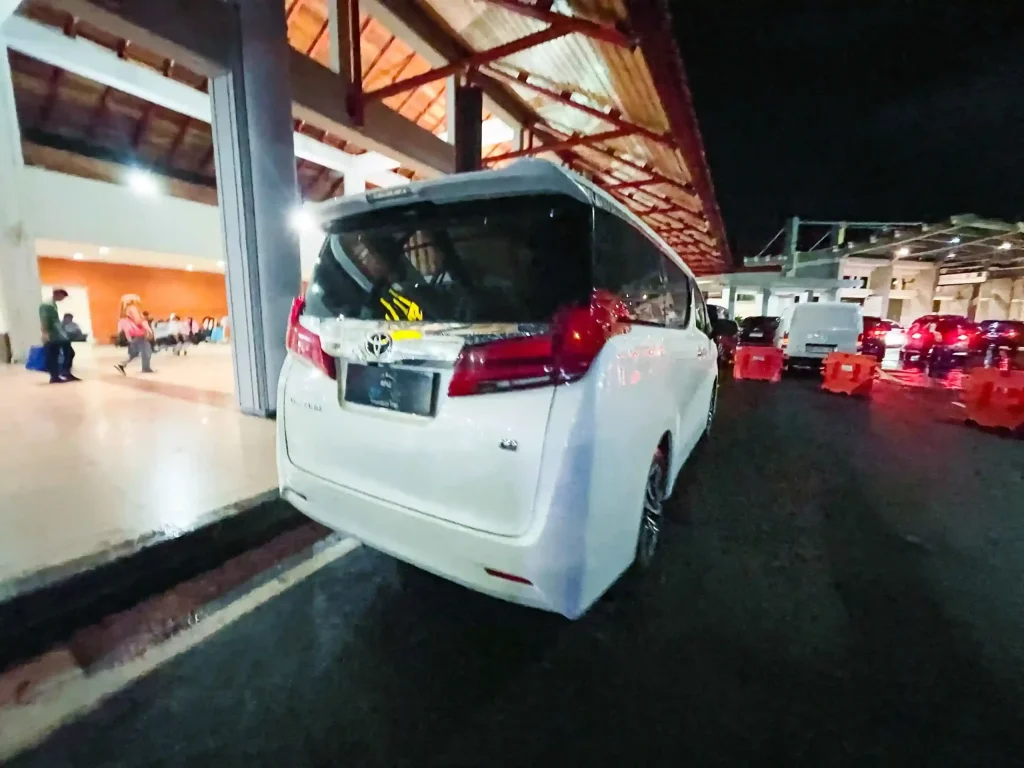
| Chauffeured airport-villa transfer | From USD 150 (Alphard or V-Class) | Ramp-side access subject to handler approval |
| Crew accommodation and logistics | USD 150 per day management, hotels at cost | The line that rewards annual hotel blocks most |
| Total per arrival, light jet | USD 2,500-5,000 | Realistic all-in planning number |
| Total per arrival, heavy jet | USD 6,000-12,000 | Peak-season arrivals trend to the top of the band |
Fuel gets its own line: according to the Logistics Capacity Assessment, jet fuel at DPS runs USD 0.907 per litre for international operations. For a quarterly heavy-jet rotation, the annual ground envelope lands between USD 24,000 and USD 48,000 before fuel — a number a CFO can put in a budget, provided the bands are locked into a retained agreement rather than re-quoted every trip.
What Keeps a Flight Crew Loyal to the Bali Rotation?
Crew retention on a repeat route is mostly logistics dignity. Pilots leave flight departments over accumulated small indignities — bad hotels, no waiting transport, ambiguous standby terms — more often than over salary. For Bali specifically:
- Fix the hotel. Same property every rotation, booked as an annual block. Crew accommodation and logistics management runs about USD 150 per day as of 2026, with hotels and transport billed at cost.
- Pre-arrange crew transport. Crews who clear CIQ and find a driver waiting fly the rotation happily for years.
- Pad the wet season. November-March weather affects ops planning; build schedule buffers so crews are not pressured into marginal decisions.
- Keep duty records clean. Consistent handlers produce consistent turnaround times, which keeps duty-time planning honest.
One forward note for 2027 planning: ICAO Annex 14 Amendment 18 on ground handling becomes applicable on 26 November 2026, and it will shape compliance expectations at DPS. Family offices with retained arrangements will absorb that transition through their coordinator; ad-hoc arrangers will be re-learning the ground rules mid-rotation.
Frequently Asked Questions
How far ahead should a family office request DPS slots for peak-season Bali trips?
A full quarter ahead for July-August and December-January arrivals. DPS is slot-coordinated with PPR required under 2025 guidance, and the dedicated GA apron holds roughly 14 aircraft, so peak weeks fill early. For off-peak months, two to three weeks is usually workable, but quarterly filers should standardise on the earlier cadence year-round.
Can one Indonesian permit cover several Bali trips in the same quarter?
Not for routine international arrivals — each foreign-registered arrival runs through the DGCA landing permit process, which takes 3-5 business days as of August 2026. The exception is the special domestic permit with up to 30-day validity, confirmed through 2025-2026, which covers multi-leg itineraries inside Indonesia during a single extended visit.
What should a family office budget annually for Bali ground costs on a quarterly rotation?
Using market bands as of August 2026: roughly USD 10,000-20,000 per year for a light jet and USD 24,000-48,000 for a heavy jet across eight movements, covering handling, CIQ, concierge, and transfers — before fuel and statutory charges. These are quote-based commercial bands, not official tariffs, and a retained agreement is what holds them steady.

Frequently asked questions
How far ahead should a family office request DPS slots for peak-season Bali trips?
A full quarter ahead for July-August and December-January arrivals. DPS is slot-coordinated with PPR required under 2025 guidance, and the dedicated GA apron holds roughly 14 aircraft, so peak weeks fill early. For off-peak months, two to three weeks is usually workable, but quarterly filers should standardise on the earlier cadence year-round.
Can one Indonesian permit cover several Bali trips in the same quarter?
Not for routine international arrivals — each foreign-registered arrival runs through the DGCA landing permit process, which takes 3-5 business days as of August 2026. The exception is the special domestic permit with up to 30-day validity, confirmed through 2025-2026, which covers multi-leg itineraries inside Indonesia during a single extended visit.
What should a family office budget annually for Bali ground costs on a quarterly rotation?
Using market bands as of August 2026: roughly USD 10,000-20,000 per year for a light jet and USD 24,000-48,000 for a heavy jet across eight movements, covering handling, CIQ, concierge, and transfers — before fuel and statutory charges. These are quote-based commercial bands, not official tariffs, and a retained agreement is what holds them steady.
Last updated 4 August 2026
Related Articles
- Bali Private Jet Near Me’: Top 2027 Departure Hubs in Asia for Four Seasons and Remote Lands Jo
- From Jakarta to Bali Private Jet: Best 2027 Routing Options for Southeast Asian Luxury Traveler
- Booking Your Bali Private Jet: A 2027 Pre-Arrival Customs Guide
- How Much Does a Budget Bali Stay Start at in 2027? Excluding Hotels: 50/Day Breakdown
Send your flight details
Tail number, MTOW, dates, passengers and services — a written quote typically comes back within one working day.
Leave a Reply