
Indonesia Private Jet Cabotage Rules
What foreign-registered jets can and cannot fly domestically from Bali: legal vs prohibited legs, 30-day special domestic permits, and DGCA timelines as of

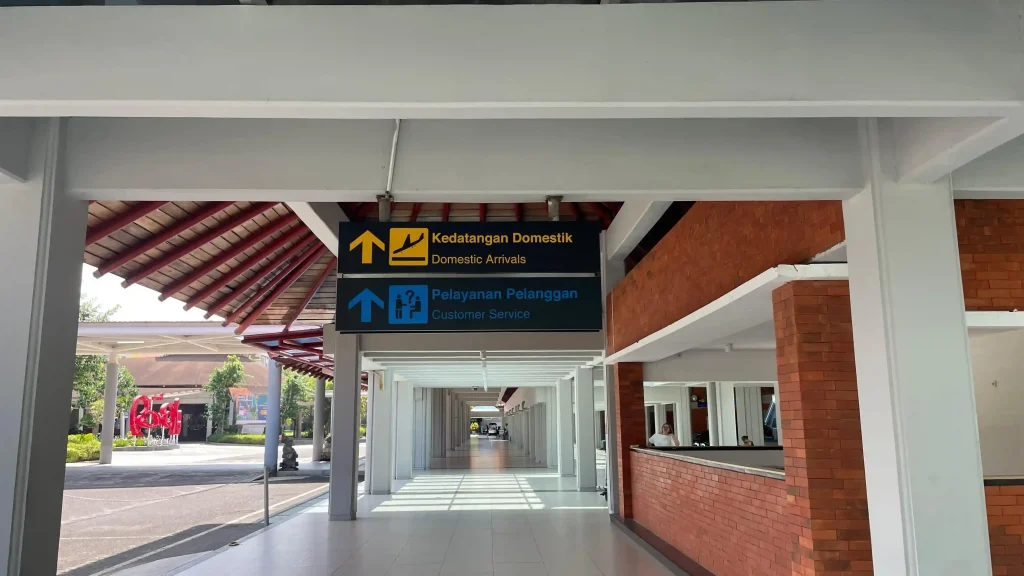
Indonesia bars foreign-registered jets from carrying revenue traffic between domestic points — the classic cabotage restriction. From Bali, a foreign jet may continue domestically only with the same inbound party, empty, or under a special domestic permit valid for up to 30 days (as of 2025-2026). New paying passengers boarding at DPS for a domestic leg are off-limits.
Every week, crews land at I Gusti Ngurah Rai International Airport (IATA DPS, ICAO WADD) in Tuban, Badung Regency, planning to add “just one more leg” — Jakarta for a board meeting, Labuan Bajo for a client’s yacht. Some of those legs are routine. Others quietly cross into cabotage territory. This guide maps the line as it stands in August 2026, subject to change.
What Does Cabotage Mean for a Foreign-Registered Jet in Indonesia?
Cabotage is the reservation of domestic air traffic for national carriers. In Indonesia’s application of the principle, a foreign-registered aircraft — N-, VH-, 9V-, or M-registered alike — may not carry passengers or cargo for remuneration between two Indonesian points. That traffic belongs to Indonesian AOC holders operating PK-registered aircraft, and the DGCA applies the rule to business jets exactly as it does to scheduled airlines.
What the rule does not do is ban domestic flying outright. Three categories of movement remain open to foreign jets: the international arrival and departure themselves, empty positioning legs, and — the most useful for owners and operators — domestic continuation with the same party under a special domestic permit. Indonesian authorities confirmed through 2025 and 2026 that these special permits can carry validity of up to 30 days, which reshapes the planning picture for multi-stop itineraries.
The surrounding framework is strict. Ground handling is mandatory for foreign jets at all Indonesian airports, a requirement confirmed in 2025. Indonesia treats its airports as slot-coordinated, with PPR and slots required under 2025 guidance. And landing permits processed through the DGCA currently take 3-5 business days with extensive documentation. Our desk’s support for charter operators exists precisely because these threads — permit, security clearance, slot, handler — have to be pulled together in the correct order before wheels-up, not after.
Which Domestic Legs From Bali Are Legal — and Which Are Not?
The cleanest way to test a planned leg is to ask two questions: who is on board, and who is paying for this specific sector? The table below runs the common scenarios we see from DPS.
| Scenario starting from Bali (DPS/WADD) | Cabotage status | Why |
|---|---|---|
| International arrival, later international departure (Singapore–Bali–Sydney) | Legal | No domestic sector flown; standard DGCA landing permit and FSC apply |
| Empty ferry or positioning leg to Jakarta, Lombok, or Surabaya | Legal | No revenue payload carried between domestic points |
| Same inbound party continues Bali–Jakarta–Bali within one international itinerary | Legal with special domestic permit | Approved case-by-case; permit validity up to 30 days as of 2025-2026 |
| Owner’s aircraft repositions crew-only between Indonesian airports | Legal | Treated as non-revenue movement, though permits and slots still apply |
| New passengers board at DPS for a paid flight to Jakarta | Not legal | Revenue domestic traffic is reserved for Indonesian-registered carriers |
| Selling individual seats on Bali–Lombok or Bali–Komodo hops | Not legal | Commercial domestic operation requires an Indonesian AOC and PK registration |
| Foreign jet based at DPS flying repeat domestic rotations for hire | Not legal | The pattern constitutes domestic commercial operation regardless of paperwork |
The “same party” principle is the hinge of the whole system: passengers who arrived on the aircraft as part of one continuous international journey may, with approval, continue domestically on it. The moment a new name appears on the manifest for a paid domestic sector, the flight changes character in the DGCA’s eyes.
The final row matters for owners who winter in Bali. A foreign jet that sits at the GA apron — which holds roughly 14 aircraft, at the terminal ExecuJet has operated since November 2022 — and flies recurring domestic missions for compensation will attract scrutiny however each permit application is framed.
How Does the Special Domestic Permit With 30-Day Validity Work?
The special domestic permit is Indonesia’s mechanism for letting legitimate international visitors see more than one Indonesian destination without chartering a second, locally registered aircraft. As confirmed in 2025-2026 guidance, validity can extend to 30 days, long enough to cover a Bali–Labuan Bajo–Raja Ampat–Bali routing with generous ground time at each stop.
Approval is case-by-case, and the assessment centers on continuity: the domestic legs must read as an extension of the international journey, not as a standalone domestic operation. In practice that means the passenger manifest on domestic sectors should match the inbound manifest, the routing should be declared up front rather than added opportunistically leg by leg, and the aircraft should ultimately depart Indonesia with broadly the same party it brought in.
File the special domestic permit application alongside the DGCA landing permit rather than sequentially — the landing permit alone runs 3-5 business days as of August 2026, and bundling avoids stacking two review clocks. Documentation is extensive: registration and airworthiness certificates, insurance, crew licenses, full routing, and passenger details.
What Filings Sit Behind Every Domestic Leg From DPS?
Cabotage clearance is only one layer. Each sector inside Indonesia carries its own administrative stack, and a missing element grounds the leg just as surely as a refused permit.
| Requirement | Channel | Planning note (as of August 2026) |
|---|---|---|
| Landing and overflight permit | DGCA process | 3-5 business days; extensive documentation required |
| Special domestic permit (if domestic legs flown) | DGCA, case-by-case | Validity up to 30 days; file together with the landing permit |
| Flight Security Clearance (FSC) | Official SMS-FSC digital system | File for each operation; digital submission has replaced legacy channels |
| Airport slot and PPR | Slot coordination at each airport | Indonesia treats airports as slot-coordinated under 2025 guidance |
| Ground handling appointment | Licensed handler at each stop | Mandatory for foreign jets at all Indonesian airports, confirmed 2025 |
Note that the stack repeats at every airport on the itinerary. A Bali–Jakarta–Bali continuation means slots and handling at both ends, plus FSC coverage for each sector — not a single blanket approval.
How Should Operators Sequence a Multi-Stop Indonesian Itinerary From Bali?
Ordering the work correctly is most of the battle. A sequence that holds up in practice:
- Freeze the routing and manifest first. The special domestic permit is judged on declared continuity, so changes after filing weaken the application and can force a restart of the 3-5 business day clock.
- File the DGCA permit and special domestic permit together, with the FSC submitted through the SMS-FSC system in parallel.
- Request slots and PPR at every airport on the routing, not just DPS. Secondary airports have thinner coordination capacity and answer more slowly.
- Appoint a licensed ground handler at each stop before confirming passenger schedules, since handling is mandatory and handler confirmation is often requested during permit review.
- Respect the calendar. Slot and apron pressure at DPS peaks in July-August and December-January, and the November-March wet season adds operational planning constraints across the archipelago. In peak windows, start the process at least a week out rather than treating 3-5 business days as a promise.
The penalty for getting this wrong is not theoretical: misdeclared domestic legs risk refused clearances, fines, and in serious cases detention of the aircraft. Note as well that ICAO Annex 14 Amendment 18 on ground handling becomes applicable on 26 November 2026, shaping DPS compliance into 2027 — operators building recurring Indonesia programs should expect the handling layer to formalize further, not loosen.
Frequently Asked Questions
Can a foreign-registered private jet carry passengers from Bali to Jakarta?
Only in narrow cases. If the passengers arrived on the same aircraft as part of one international itinerary, a special domestic permit — valid for up to 30 days as of 2025-2026 — can authorize the leg. Boarding new passengers in Bali for a paid domestic flight is cabotage, and that traffic is reserved for Indonesian-registered operators.
How far in advance should I apply for Indonesia’s special domestic permit when starting from Bali?
Build in at least one full week. The DGCA landing permit alone runs 3-5 business days as of August 2026, and the special domestic permit is assessed case-by-case on top, with routing, passenger manifests, and journey continuity all reviewed. During the July-August and December-January peaks, slots and apron space at DPS tighten, so earlier filing is safer.
Do empty positioning flights between Bali and other Indonesian airports count as cabotage?
No. Cabotage covers revenue traffic — paying passengers or cargo — carried between two domestic points. An empty ferry leg from DPS to Lombok or Jakarta carries neither, so it sits outside the restriction. It still requires its own permits, a coordinated slot with PPR, an FSC filed through the SMS-FSC system, and a mandatory ground handling appointment.

Frequently asked questions
Can a foreign-registered private jet carry passengers from Bali to Jakarta?
Only in narrow cases. If the passengers arrived on the same aircraft as part of one international itinerary, a special domestic permit — valid for up to 30 days as of 2025-2026 — can authorize the leg. Boarding new passengers in Bali for a paid domestic flight is cabotage, and that traffic is reserved for Indonesian-registered operators.
How far in advance should I apply for Indonesia’s special domestic permit when starting from Bali?
Build in at least one full week. The DGCA landing permit alone runs 3-5 business days as of August 2026, and the special domestic permit is assessed case-by-case on top, with routing, passenger manifests, and journey continuity all reviewed. During the July-August and December-January peaks, slots and apron space at DPS tighten, so earlier filing is safer.
Do empty positioning flights between Bali and other Indonesian airports count as cabotage?
No. Cabotage covers revenue traffic — paying passengers or cargo — carried between two domestic points. An empty ferry leg from DPS to Lombok or Jakarta carries neither, so it sits outside the restriction. It still requires its own permits, a coordinated slot with PPR, an FSC filed through the SMS-FSC system, and a mandatory ground handling appointment.
Last updated 4 August 2026

Related Articles
- Bali Private Jet Near Me’: Top 2027 Departure Hubs in Asia for Four Seasons and Remote Lands Jo
- From Jakarta to Bali Private Jet: Best 2027 Routing Options for Southeast Asian Luxury Traveler
- Booking Your Bali Private Jet: A 2027 Pre-Arrival Customs Guide
- How Much Does a Budget Bali Stay Start at in 2027? Excluding Hotels: 50/Day Breakdown
Send your flight details
Tail number, MTOW, dates, passengers and services — a written quote typically comes back within one working day.
Leave a Reply